
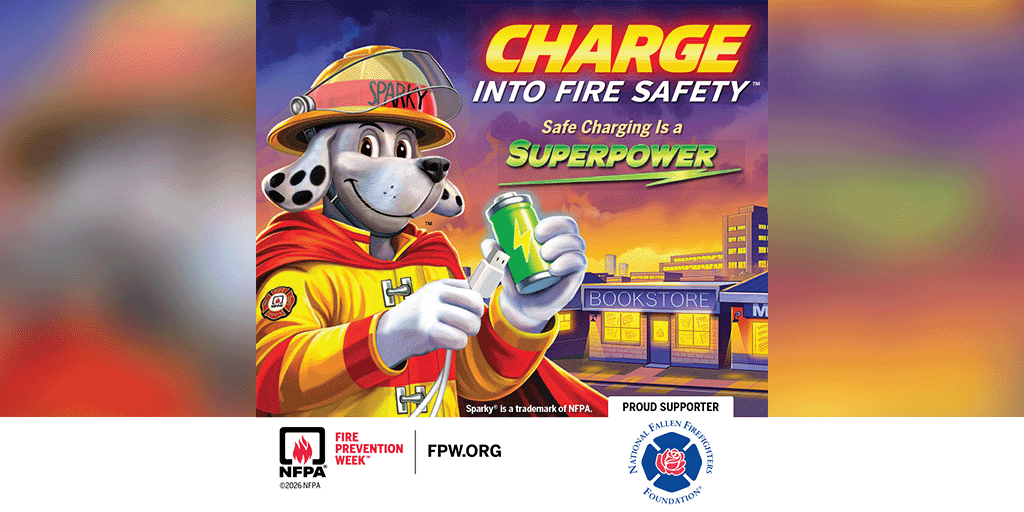
The National Fallen Firefighters Foundation (NFFF) is teaming up with the National Fire Protection Association® (NFPA®) to support Fire Prevention Week. This year’s FPW theme, “Charge into Fire Safety: Safe Charging Is a Superpower,” focuses on the simple steps people can take to recharge safely. Safe charging means making smart choices every time you plug in.
Many devices used in our daily lives—phones, tablets, laptops, tools, toys, e-bikes, and scooters—run on rechargeable lithium-ion batteries, which store a lot of energy in a small space. If they are damaged or charged the wrong way, they can overheat, start a fire, or even explode.
“Safe charging really is a superpower, because the fire that never starts is the one no firefighter has to fight,” said NFFF CEO Victor Stagnaro. “Every home fire prevented means fewer emergency responses, fewer injuries, and fewer names added to the National Memorial. That is why we are proud to stand with NFPA this Fire Prevention Week.”
The NFFF’s commitment to firefighter safety extends beyond responding to tragedy. Through education and research initiatives, training programs, peer resources, fire department assessments, and partnerships with the fire service and communities nationwide, the Foundation works to support firefighter health, wellness, and safety and help prevent line-of-duty injuries, deaths, and occupational illness.
Fire prevention is an important part of that work. The choices we make at home can help prevent fires before firefighters ever need to respond. This Fire Prevention Week, the NFFF and NFPA encourage everyone to take a few simple steps to charge lithium-ion battery devices safely:
- Use the cord and charger that came with your device or one approved by the manufacturer. Using the wrong charger can damage the battery and increase the risk of fire.
- Charge devices on a table, desk, or other hard, flat surface. Do not charge them on beds, couches, or under pillows. Devices and chargers produce heat during normal charging. Soft surfaces can trap heat and block airflow, which can cause the battery to overheat.
- Stop using your device if it feels very hot, starts to swell, is smoking, or has a strange smell. These are warning signs that the battery may be damaged or failing.
- Unplug your device when it is fully charged. Do not leave it plugged in longer than needed. Leaving a device plugged in too long can increase heat and stress on the battery.
- Charge larger items like e-bikes, scooters, and power tools outside and away from exits. These batteries are larger and store more energy. If they fail, fires can grow quickly and spread.
- When on a plane, keep your device where you can see it while charging. Do not charge devices in overhead compartments. Do not charge e-cigarettes or vapes on a plane. If a battery overheats or fails, it is important for the flight crew to respond quickly.
For more information about FPW programs in your area, please contact your local fire department. To learn more about lithium-ion battery safety, visit fpw.org. To help the NFFF continue its work advancing firefighter safety nationwide, visit firehero.org/donate/.