Evolving Health Practices
Establish and regularly update health and wellness policies, including health screenings and fitness assessments, to reflect evolving science and best practices.
Related Pillar and Perspective:
- Health and Wellness
- Practices and Standards
Inside the New Firefighter Life Safety Initiative 5
Combines these original initiatives:
- Investigations
- Medical and Fitness Standards
More About Initiative #5 - Cancer Awareness Month
- Firefighter Cancer Support Network
- National Firefighter Registry (NFR) for Cancer
- NFPA: Firefighters and Cancer
- Wildfire Today: Help reduce cancer in the fire service
- Congress Passes Legislation Providing Cancer Benefits to Families of Fallen Public Safety Officers
- Answer the call: Help reduce cancer in the fire service
The revised Life Safety Initiatives Matrix was developed to better respond to the evolving needs of the nation’s fire service. The original 16 initiatives were evaluated, restructured, and consolidated into 12 initiatives, organized under four primary pillars and addressed from three distinct perspectives. The result is a more comprehensive and adaptable framework designed to guide behavior and decision-making that improves firefighter survivability and quality of life.
In recognition of January as Firefighter Occupational Cancer Awareness Month, the focus is placed on Initiative #5, which falls under Pillar II: Health & Wellness and is examined through the Practices & Standards perspective. Initiative #5, Evolving Health Practices, emphasizes a shared responsibility between fire service organizations and individual firefighters to establish, support, and comply with evidence-based health and wellness policies. This includes ongoing education on cancer prevention, regular health screenings, and medical surveillance practices that reflect advancing science and recognized best practices.
This initiative calls on fire service leaders and firefighters alike to take action. Review your department’s current health and wellness policies, assess alignment with recognized best practices, and identify opportunities for improvement. Commit to strengthening education, compliance, and accountability—because proactive, informed action today is essential to protecting firefighter health and longevity tomorrow. – Danny Kistner, Director of Fire Service Programs
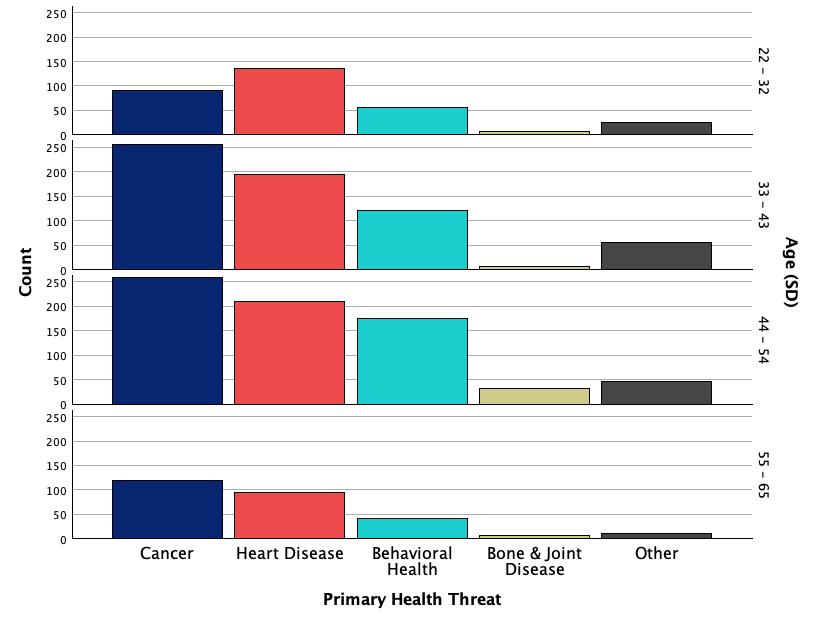
In a recent NFFF survey using a convenience sample, firefighters were asked to identify what they believe is the primary health threat facing the industry. While this response does not allow us to conclude that younger firefighters do not view cancer as the primary health threat, it does suggest that we should continue emphasizing cancer prevention—especially early in a firefighter’s career when exposure should be minimized.
Early Detection Saves Lives
As firefighters, you train relentlessly to protect others—but a detailed physical can be just as critical in protecting yourselves. More departments are choosing to offer comprehensive exams, including ultrasounds, that can uncover hidden health issues long before symptoms appear. In one case, a healthy 35-year-old firefighter with no medical history learned through a detailed physical that he had thyroid cancer—something he never would have known without advanced screening. Because it was caught early, he was able to receive treatment, return to the job he loves, and is now cancer-free. That early detection didn’t just change his diagnosis; it preserved his future and protected the time he has with his wife and children. His experience is a powerful reminder that early detection saves lives—and that detailed physicals can mean the difference between a hopeful outcome and a far more uncertain one for firefighters and their families.
Action-Steps for Firefighters & Fire Officers
The goal for 3 Action-Steps is to translate what may be perceived as overwhelming challenges in our fire service, into specific, measurable, and achievable tasks that can be accomplished in the immediate or short-term. Each of these is based on the three levels at which the fire service operates, the task, tactical, and strategic. This allows a Firefighter, Company, or Chief Officer to close the gap on the challenges we collectively face and move towards action in the battle to reduce firefighter injury and death.
For Firefighters
Stay on air. When operating in the IDLH it is clear that not only toxic gases, but more concerning, the nano-particulates, are entering our respiratory tract and beginning the work to damage and degrade tissue. Over the course of years, this results in cancer and other chronic illnesses which rob us of our health and lives. Wearing the SCBA is not enough, you must breathe the uncontaminated air you brought to the fight.
For Company Officers
Model the behavior. The Company Officer sets the tone for the crew on the fireground. Making it clear that protecting the members’ lungs, respiratory tract, and health, while achieving the mission, can co-exist. Setting a clear expectation before the fire and then adhering to that standard shows the firefighters that “Until Everyone Comes Home” also means in twenty or twenty-five years when their service to the community is done, they can go home…healthy.
For Chief Officers
Create the policy. At the organizational and strategic-level of any fire service organization the Chief Officer builds the policy and procedure by which a department functions. Members cannot adhere to a procedure which doesn’t exist. Design policy which explicitly states that “no-drop” is the standard. Anyone operating in or around the IDLH, from arrival on scene through overhaul, shall/must stay on air. Like any other policy, it becomes a reflection of culture and speaks to what the Chief will ultimately stand for, in this case, helping ensure the health of an organization.
Credit Hours: 1 Hour
Credit Hours: 1 Hour
Credit Hours: 1 Hour
Credit Hours: 1 Hour
Credit Hours: 1 Hour
Credit Hours: 1 Hour
Credit Hours: 1 Hour
Credit Hours: 1 Hour
Find research and resources on health, wellness, nutrition, fitness, physicals, cancer, and cardiac at www.firstrespondercenter.org
The FRCE is dedicated to protecting the lives and livelihoods of first responders, nationwide. Our education and research initiatives constantly shed new light on challenges to the health, safety and well-being of firefighters, EMS personnel and other first responders. It’s all with the goal of reducing line-of-duty injuries and deaths as well as occupational illnesses.
Initiative #5 Feedback
Help us improve firefighter health and wellness!
Your feedback on Initiative #5 (Evolving Health Practices) will help departments nationwide strengthen policies, protect firefighter health, and align with best practices. This survey takes less than 2 minutes.