Mentorship Momentum
Foster a sustainable culture of knowledge transfer and motivation to mentor, ensuring that the torch of mentorship is passed through successive generations.
Related Pillar and Perspective:
- Survival Culture and Leadership
- Firefighter Well-Being
Inside the New Firefighter Life Safety Initiative 1
Combines these original initiatives:
- Risk Management
- Cultural Change
- Empowerment
Mentorship Momentum emphasizes:
- Active engagement across all levels, from new recruits to chief officers
- Deliberate mentorship practices that build character, confidence, competence, and confidence
- Succession planning that prepares the next generation of leaders through shared experience, guidance, and institutional knowledge
The revised Life Safety Initiatives Matrix was developed to better respond to the evolving needs of the nation’s fire service. The original 16 initiatives were evaluated, restructured, and consolidated into 12 initiatives, organized under four primary pillars and addressed from three distinct perspectives. The result is a more comprehensive and adaptable framework designed to guide behavior and decision-making that improves firefighter survivability and quality of life.
This month, attention turns to Life Safety Initiative #1: Mentorship Momentum, positioned under Pillar I: Survival Culture and Leadership and examined through the Firefighter Well-Being perspective. This initiative highlights the essential role of mentorship in shaping the future of the fire service. It calls for intentional, structured, and sustained efforts to cultivate learning, leadership, and engagement at every rank.
Initiative #1 challenges fire service leaders and members alike to take ownership of mentorship as a core responsibility. Review your department’s current mentorship practices, evaluate how effectively they support professional development, and identify opportunities to strengthen them. Encourage open dialogue, foster cross‑generational learning, and ensure that leadership development is not left to chance. The goal is to foster a culture of continuous learning, where every firefighter is both a student and a teacher.
Proactive mentorship today builds the foundation for tomorrow’s success. By investing in the most important asset we have, our people, at every stage of their careers, we safeguard the future of our profession and ensure that the fire rescue service remains strong, resilient, and prepared for the challenges ahead. – Danny Kistner, Director of Fire Service Programs
More About Initiative
- CRACKYL ARTICLES ON MENTORSHIP
- IAFC: Company Officer Section Mentoring
- International Association of Wildland Fire Mentoring Program
- Ivey Business School Leader Character Framework
- NETC Library, EFO Papers Mentor (2018-2025)
- UL Fire Safety Academy | Resource Library
- U.S. Fire Administration Volunteer Internship Program
Initiative Article Spotlight
- American Review of Public Administration: Police Mentoring of At-Risk Youth: Case Study of Police-Led Mentoring Program Leadership Development
- Center for Creative Leadership: How to Use Coaching and Mentoring Programs to Develop New Leaders
- Fire Engineering : Fire Service Mentorship: The Missing Pieces
- Firefighter Nation: The Importance of Mentorship in the Fire Service: Building the Best Damn Team
- International Association of Chiefs of Police: The Power of Mentorship
- International Fire Service Journal of Leadership and Management: “They’re Just Never Told That They Can”: Recruitment and Retention of Women in the Fire Service
Book Spotlight
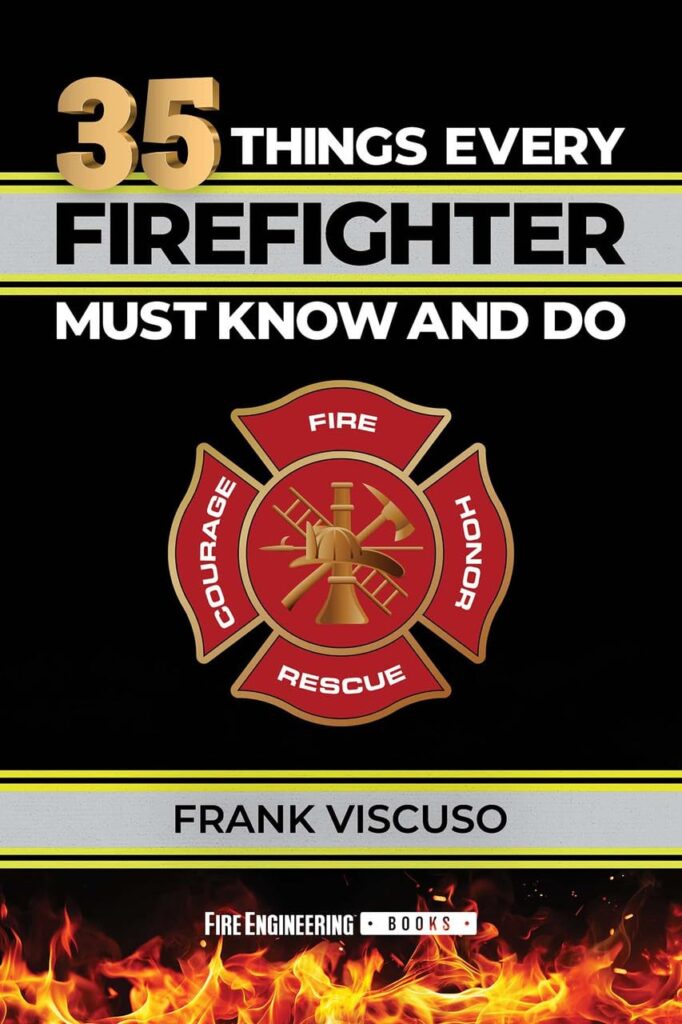
In 35 Things Every Firefighter Must Know and Do, best-selling author and fire service leader Frank Viscuso delivers a practical and inspiring guide for both new and experienced firefighters. Designed to build competence, confidence, and accountability, this book outlines essential principles that support long-term success in the fire service―and beyond. Each of the 35 chapters focuses on a core lesson, offering real-world context, leadership insight, and reflection prompts to help readers assess their strengths and areas for growth. From equipment checks and mental preparedness to communication, teamwork, and personal responsibility, Viscuso provides a structured path for firefighters to grow into respected professionals. Whether you’re just entering the fire service or mentoring the next generation, this book serves as a trusted reference for developing the habits, mindset, and leadership qualities expected of today’s firefighters. It’s not just about learning the job―it’s about becoming someone others can count on. Key topics include: ―Building credibility and professionalism from day one ―Understanding the role of mentorship, culture, and accountability ―Staying physically and mentally fit ―Cultivating team cohesion and trust ―Advancing your career while serving others This is a book every firefighter will want in their personal library and will serve as a vital resource for officers who are serious about enhancing their team’s performance. Also, ideal for recruits, trainers, and departments aiming to strengthen foundational values and professional excellence across the ranks.
* Your purchase through our Amazon Associates program will benefit the programs of the National Fallen Firefighters Foundation to honor America’s fallen fire heroes; support their families, colleagues, and organizations; and work to reduce preventable firefighter death and injury.
Initiative Resource Spotlight
St. Petersburg Fire Rescue
The SPFR Leadership & Development Guide is a comprehensive resource designed to cultivate motivated, capable professionals and foster a culture of continuous growth and excellence across the department. Grounded in a commitment to safety and service, this guide provides accessible and equitable learning opportunities that strengthen individual skills and elevate team performance. By empowering every member to reach their full potential, it supports a more prepared, resilient department dedicated to protecting the well-being of the community it serves.
Podcasts

Action-Steps for Firefighters & Fire Officers
For Firefighters
Be teachable.
A mentoring relationship has to have both a mentor and a mentee, a teacher and student. In the fire service the titles can differ: probie, probationer, or cadet among others. But in general we typically view the junior member, the newest one to the organization, as the learner. This is an incredibly vital role, because if we do not have firefighters who are open and willing to learn, the opportunity to establish a culture of excellence will not move forward.
Demonstrating the motivation to understand and grow your base of knowledge is key not only to your personal development as a firefighter, but for the organization as well. Your willingness to learn creates not only the pathway for you to be better, but for the mentor to understand their craft at a higher level. You wanting to learn means the teacher must teach, in a sense, you are creating the opportunity for them as well. Remember to prioritize sleep and recovery.
Ask the senior members and unit officers for help. Be strong enough to say that you don’t know. Look for any chance to improve your skillset. Create the opportunities for your team to help make you better at the craft. Learning to achieve proficiency, not just competency, means you are that much closer to becoming the mentor yourself.
For Company Officers
The first formal mentor.
Your role in the firehouse and on the floor cannot be understated. You are the mentor of first resort. As a company officer you may be fortunate to have senior firefighters who can apply their leadership and teaching skills and help prepare the new firefighter. Even then you are the formal leader and are ultimately responsible for ensuring that a healthy, viable mentoring relationship is established. But in particular, without the benefit of more seasoned firefighters, you have to fill that role.
The company officer’s job is ultimately about teaching. Every shift or duty night should be focused on passing on not only the technical aspects of the craft, but the history and expectations of your organization and the broader fire service.
Mentoring someone new to your organization or to the fire service is an all-encompassing job. Teaching task-level and tactical concepts that reinforce basic incident scene skills are as vital as cancer reduction, the importance of mental and physical health, integrating family life into your fire service. Being able to coach, mentor, and teach means you have to understand all these things at a much higher level, and certainly have the humility to know when to ask for others to help.
For Chief Officers
Establish a learning culture.
Organizational and strategic-level leaders have a key role in establishing a culture of learning. Making sure that the members in every corner have the opportunity to learn and then pass on that knowledge starts at the top. Vital to that is a foundation set by expectations, the ultimate guiderails to not only saying that learning and teaching are crucial to the organization’s progress, but the what and how of that process. No expectations are the equivalent of a rudderless ship and can lead to ineffective culture.
Reinforcing the need for all members of the organization to build healthy mentoring relationships and providing the resources by which to foster that environment. While oftentimes the perception is of needing more things, always remember the ultimate resource is time.
Ensuring programmatic efforts that teach how mentoring can be accomplished both formally and informally, creating broad understanding of all the needs for an effective fire service organization such as technical and tactical proficiency, leadership skills including conflict resolution and team dynamics, fire service history, and all aspects of health and wellness in the fire service.
For Family
Be flexible.
Being a leader in the home, as a spouse, is crucial to the success of a fire family. Trust is an intrinsic part of this puzzle as well, as one has to rely on the other that each partner believes the other is doing their best every day—this might look different every day, but support and not second-guessing is imperative. Schedules change and the partner at home must pivot, and teaching the family to problem solve independent of the first responder is a trait learned for life.
Being respectful of firehouse boundaries during the shift of your spouse. This is paramount, and ensuring that the first responder is not stressed about home life. Being able to be focused on the job and not worrying about the house is a gift.
Being able to pass on the honor of being a fire family, and raising children to respect those that are willing to lay down their lives for a stranger—this includes firefighters, law enforcement, military. Educating children on what their parent does at the firehouse, bringing them to the firehouse, allowing them to grow up with bonus aunts and uncles and cousins is a gift.
The ultimate job of the family unit as a whole is to support one another. The success of the family is dependent on communication, trust, and being flexible when the schedule changes.
Credit Hours: 1 Hour
Credit Hours: 1 Hour
Credit Hours: 1 Hour
Credit Hours: 1 Hour
Credit Hours: 1 Hour
Credit Hours: 1 Hour
Credit Hours: 1 Hour
Credit Hours: 1 Hour
Credit Hours: 1 Hour
Credit Hours: 1 Hour
Credit Hours: 1 Hour
Credit Hours: 1 Hour
Help us improve firefighter mentorship!
Your feedback on Initiative #1 (Mentorship Momentum) will help departments nationwide strengthen policies, guide firefighter development and career success, and align with best practices. This survey takes less than 2 minutes.
Initiative #1 Feedback
Help us improve firefighter mentorship!