Leading the Way
Establish consistent leadership practices that empower all members to model survival-focused behaviors and promote a culture of growth and resilience.
Related Pillar and Perspective:
- Survival Culture and Leadership
- Practices and Standards
Inside the New Firefighter Life Safety Initiative 2
Combines these original initiatives:
- Response Policies
- Empowerment
- Cultural Change
The revised Life Safety Initiatives Matrix was created to better meet the evolving needs of the nation’s fire service. After evaluating the original 16 initiatives, the framework was restructured and consolidated into 12 initiatives organized under four primary pillars and viewed through three distinct perspectives. The result is a more adaptable, forward‑looking guide designed to strengthen decision‑making, reinforce safe behaviors, and enhance firefighter survivability and quality of life.
This month, the focus turns to Life Safety Initiative #2: Leading the Way, positioned under Pillar I: Survival Culture and Leadership and examined through the Practices and Standards perspective. This initiative emphasizes the importance of establishing consistent leadership practices that empower all members to model survival‑focused behaviors and promote a culture of growth and resilience. It underscores that leadership is not defined by rank alone, it is demonstrated through daily actions, shared expectations, and a commitment to elevating the entire organization.
Leading the Way calls for intentional, structured, and sustained efforts to cultivate guiding, learning, and engagement at every level.
- Create and maintain an environment which supports healthy and safe practices
- Encourage growth and resilience throughout all levels of the organization
- Prepare personnel by being accessible, providing resources, and sharing feedback
Initiative #2 challenges fire service leaders and members alike to take ownership of leadership development as a core responsibility. Assess your department, evaluate methods used for professional growth, and identify opportunities to strengthen them. Encourage open dialogue, foster cross‑generational learning, and ensure that leadership expectations are clearly communicated and consistently modeled.
By embedding survival‑focused leadership behaviors into everyday practice, we create a culture where every firefighter is both a student and a teacher and where resilience becomes a shared standard. Proactive leadership today builds the foundation for tomorrow’s success. By investing in our people at every stage of their careers, we safeguard the future of our profession and ensure that the fire rescue service remains strong, adaptable, and prepared for potential challenges ahead. – Danny Kistner, Director of Fire Service Programs
More About Initiative
- Center for Creative Leadership
- CRACKYL, Firefighter Lifestyle & Health Magazine | Leadership & Management
- FFCA | Emergency Services Leadership Institute
- Fire Adapted Communities | Learning Network
- IAFC Training and Education Development
- ICMA Coaching Program Webinars (2026)
- Naval Postgraduate School | Master’s Degree Program
- NETC Library, EFO Papers Lead (2018-2025)
- NVFC Virtual Classroom
- UNC Charlotte | Fire and EMS Administrative Leadership Certificate
- U.S. Fire Administration | Executive Fire Officer Program
- Women in Fire | Resources
Initiative Article Spotlight
- Center for Creative Leadership: When Crises Collide: How Leaders Untangle Organizational Stressors
- Firefighter Nation: A Professional Development Showcase Can Upskill and Connect Your Team
- International City/County Management Association: From KPIs to Council Conversation: Embedding Performance Data in Local Government Decision-Making
- International Fire Service Journal of Leadership and Management: Leading the Charge: A Leadership Framework for Advancing Behavioral Health in the Fire Service
- Journal of Emergency Medical Services: Leadership Foundations for Aspiring and New EMS Leaders
Book Spotlight
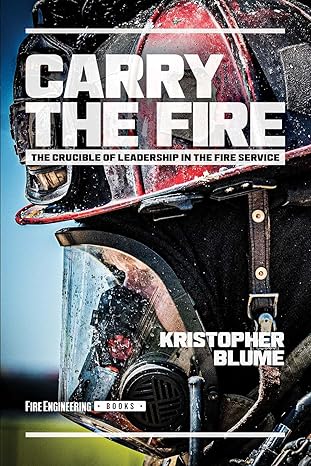
Carry the Fire by Chief Kristopher Blume is a leadership guide for the fire service focused on real-world lessons in mentorship, discipline, motivation, and evolving firehouse culture. A must-read for officers, chiefs, and anyone preparing to lead.
* Your purchase through our Amazon Associates program will benefit the programs of the National Fallen Firefighters Foundation to honor America’s fallen fire heroes; support their families, colleagues, and organizations; and work to reduce preventable firefighter death and injury.
Podcasts


Action-Steps for Firefighters & Fire Officers
Firefighter: The Leader of Self
- Effective followership and leadership are two sides of the same coin; both require humility, work ethic, and competence.
- Leadership begins with self—doing the right thing when no one is looking.
- Mastery of the craft allows even new members to lead through task-level decisions and by assisting in the onboarding of others.
Company Officer: The Visible Leader
- Success on the street is a direct result of leadership in the firehouse. Dysfunction in the station cannot be "switched off" at the scene.
- As the most visible leader, the officer is the trainer of first resort and the calm, composed decision-maker at the point of attack.
- Their composure and maturity set the standard for the entire crew’s environment.
Chief Officer: The Strategic Developer
- Rejects the myth that leaders are "born." Recognizes that effective leadership requires effort, military-style training, and an education pipeline.
- Understands that leadership development is not a luxury, but a necessity for operational excellence.
- Focuses on long-term resource management to ensure leaders are developed at every level of the organization.
Family: The Wellness Leader
- Leading the family toward healthy habits—like shared meal prep and daily walks—reduces collective stress and builds a stronger team.
- Promotes exercise as a primary tool to process the rigors of the job and keep work-related stress out of the home.
- Uses organized sports and shared chores to teach children foundational life skills: teamwork, conflict resolution, and nutrition.
Credit Hours: 1 Hour
Credit Hours: 1 Hour
Credit Hours: 1 Hour
Credit Hours: 1 Hour
Credit Hours: 1 Hour
Credit Hours: 1 Hour
Credit Hours: 1 Hour
Credit Hours: 1 Hour
Credit Hours: 1 Hour
Credit Hours: 1 Hour
Credit Hours: 1 Hour
Credit Hours: 1 Hour
Your feedback on Initiative #2 (Leading the Way) will help departments nationwide support leadership development, guide firefighter career success, and align with best practices. This survey takes less than 2 minutes.
Initiative #2 Feedback
Help us improve firefighter leadership!