Lifelong Learning
Offer education and training opportunities that are accessible to all firefighters and across all stages of the career, ensuring that firefighters stay up-to-date with the latest techniques and technologies.
Related Pillar and Perspective:
- Training and Competency
- Firefighter Well-Being
Inside the New Firefighter Life Safety Initiative 7
Combines these original initiatives:
- Investigations
- Training Standards
The revised Life Safety Initiatives Matrix was developed to better respond to the evolving needs of the nation’s fire service. The original 16 initiatives were evaluated, restructured, and consolidated into 12 initiatives, organized under four primary pillars and addressed from three distinct perspectives. The result is a more comprehensive and adaptable framework designed to guide behavior and decision‑making that prioritizes continuous learning and supports the integration of new knowledge, techniques, and technologies.
This month, attention turns to Life Safety Initiative #7: Lifelong Learning, positioned under Pillar III: Training and Competency and examined through the Firefighter Well-Being perspective. This initiative underscores the essential role of ongoing education in strengthening readiness, enhancing safety, and supporting the long‑term wellbeing of every firefighter. It emphasizes the need to offer education and training opportunities that are accessible to all firefighters and across all stages of the career, ensuring that members stay current with proven techniques and technologies.
Lifelong Learning emphasizes:
- A commitment to continuous professional development, encouraging firefighters to expand their knowledge, adapt to evolving risks, and remain open to new research and lessons learned.
- High quality, relevant, and realistic training that reflects current hazards, operational demands, and emerging challenges across the fire rescue industry.
- Accessible and inclusive learning pathways, ensuring that every firefighter, regardless of rank, assignment, or tenure has the opportunity to build skills, strengthen competency, and advance their career.
Beyond technical proficiency, Initiative #7 recognizes that a culture of lifelong learning builds confidence, reduces uncertainty, and supports sound decision‑making under pressure. Ongoing education also enhances wellbeing by improving situational awareness, reducing preventable exposures, and equipping firefighters with the tools needed to navigate both physical and mental demands.
When firefighters are supported by accessible, modern, and forward‑thinking learning opportunities, they are better prepared to meet the challenges of today and the uncertainties of tomorrow. Proactive investment in lifelong learning strengthens the foundation of our profession for years to come. – Danny Kistner, Director of Fire Service Programs
More About Initiative
- CISA: Emergency Services Sector
- FEMA: Geospatial Resource Center
- FSEDI: Executive Development
- IAFC: KnowledgeNet
- IFSJLM: Annual Research Symposium
- NETC Library: EFO Papers Learning (2018-2025)
- NFA Course: New Executive Chief Officer R0763
- NPS – CHDS: Master’s Degree Program
- Osher Lifelong Learning Institute (OLLI)
- Responder Safety Learning Network
- Xplorlabs by UL Research Institutes
Initiative Article Spotlight
- Dr. Joe Coaching: Building a Thriving Organizational Culture in Government
- Eckerd College: Leading with Impact: How Functional Leaders Face Challenges, Focus Development and Boost Performance
- FireRescue1: The lifelong learner’s mantra: ‘I haven’t learned that … yet’
- Firefighter Nation: Growing in the Firehouse: A lifelong journey
- Firefighter Nation: Transformative Learning to Enhance the Fire Service
- Forbes: Lifelong Learning: Why The Future Of Education Has No Age Limit
- Situational Awareness Matters: Radio Discipline
- Two Dark Thirty: Enhancing Firefighter Training with Soft Skills
Book Spotlight
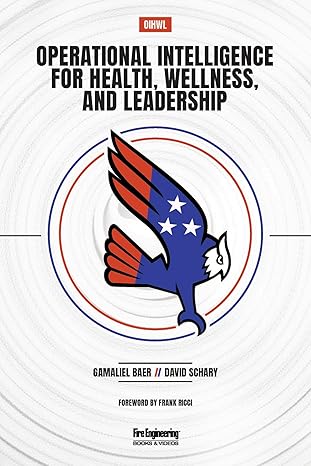
Operational Intelligence for Health, Wellness, and Leadership addresses human behavior and the impact of lifestyle on the Big Three health outcomes of heart attack, cancer, and suicide. It weaves together the concepts of resilience, physical wellness, nutritional wellness, mental wellness, and leadership. OIHWL’s model for behavior change is built using Aristotle’s philosophy of responsibility. OIHWL is designed to show the application of the behavioral change model throughout the book. The result is a logically consistent and easy-to-follow framework that any firefighter can apply to their life and that any fire department can adopt and implement as education for its members. This remains the case even if some, or all, of the hundreds of citations eventually age out, because the model is true. The final chapter presents an objective (and thus assessable) definition of leadership. It aims to displace the decades of leadership theory that is subjective in nature and often indistinguishable from management theory. Just as NFPA outlines categorically that certain fire apparatus are aerials and not engines, there is a way to distinguish, categorically, between leadership and management. OIHWL is the comprehensive guide for learning how to optimize behavior that is within your control.
* Your purchase through our Amazon Associates program will benefit the programs of the National Fallen Firefighters Foundation to honor America’s fallen fire heroes; support their families, colleagues, and organizations; and work to reduce preventable firefighter death and injury.
Podcasts
Credit Hours: 1 Hour
Credit Hours: 1 Hour
Credit Hours: 1 Hour
Credit Hours: 1 Hour
Credit Hours: 1 Hour
Credit Hours: 1 Hour
Credit Hours: 1 Hour
Credit Hours: 1 Hour
Credit Hours: 1 Hour
Credit Hours: 2 Hours
Credit Hours: 2 Hours
Credit Hours: 1 Hour
Your feedback on Initiative #7 (Lifelong Learning) will help departments nationwide strengthen policies, incorporate lifelong learning opportunities which aligns with best practices. This survey takes less than 2 minutes.
Initiative #7 Feedback
Help us improve Lifelong Learning in fire rescue!