Organizational Proficiency
Maintain awareness of skill proficiencies throughout the organization to address and fill training gaps.
Related Pillar and Perspective:
- Training and Competency
- Organizational Capacity
Inside the New Firefighter Life Safety Initiative 9
Combines these original initiatives:
- Research Agenda
- Training Standards
The revised Life Safety Initiatives Matrix was developed to better respond to the evolving needs of the nation’s fire service. The original 16 initiatives were evaluated, restructured, and consolidated into 12 initiatives, organized under four primary pillars and addressed from three distinct perspectives. The result is a more comprehensive and adaptable framework designed to guide behavior and decision-making that prioritizes continuous learning and supports the integration of new knowledge, techniques, and technologies.
This month, attention turns to Life Safety Initiative #9: Organizational Proficiency, positioned under Pillar III: Training and Competency and examined through the Organizational Capacity perspective. This initiative emphasizes the importance of developing and maintaining highly capable organizations that are prepared to meet the demands of modern fire and emergency services. Organizational proficiency goes beyond individual skills and focuses on creating systems, processes, and cultures that support excellence, accountability, and continuous improvement across all levels of the organization.
Organizational Proficiency emphasizes:
- 1. Continuous organizational improvement by regularly evaluating policies, procedures, performance measures, and operational practices to identify opportunities for growth and enhancement. Organizations that embrace continuous improvement are better equipped to adapt to changing risks, emerging technologies, and evolving community expectations.
- 2. Effective leadership and accountability through the development of leaders who foster a culture of professionalism, integrity, and operational excellence. Strong leadership promotes clear expectations, encourages sound decision-making, and ensures accountability at every level of the organization.
- 3. Operational readiness and adaptability by maintaining the resources, training systems, and organizational structures necessary to effectively respond to both current and future challenges. Proficient organizations recognize the need to anticipate change and remain flexible in the face of evolving service demands.
Life Safety Initiative #9 recognizes that the effectiveness of a fire rescue organization depends not only on the capabilities of its personnel, but also on the strength of its organizational systems and culture. When agencies invest in leadership development, performance evaluation, strategic planning, and continuous organizational learning, they create an environment where both firefighters and the communities they serve benefit from improved safety outcomes.
Organizational proficiency also contributes to long-term resilience by encouraging innovation, supporting data-informed decision-making, and promoting collaboration throughout the organization. As risks, technologies, and community needs continue to evolve, organizations that prioritize proficiency are better positioned to adapt, maintain operational excellence, and fulfill their mission safely and effectively.
By embracing Organizational Proficiency as a core component of the fire rescue mission, agencies can strengthen their operational capabilities, enhance workforce performance, and build a sustainable foundation for the future of the fire service.
– Danny Kistner, Director of the Institute for Firefighter Survivability
More About Initiative
- CPSE: Credentialing Scholarship
- Harvard Kennedy Schoo: Executive Education
- International Fire Service Training Association: Validation Committees
- Illinois Fire Service Institute: IFSI Research
- National Incident Management System (NIMS) : FEMA Emergency Management Institute
- National Institute of Standards and Technology: Fire Research Division
- National Urban Security Technology Laboratory: Programs and Projects
- NETC Library: EFO Papers Proficiency (2018-2025)
- NVFC: Live Online Trainings
- TEEX: Fire Service Chief Executive Officer
- IAFF: Training
- National Fire Academy: Training Courses
Initiative Article Spotlight
- Daily Dispatch: Understanding Firefighter Promotions and Career Progression
- Fire Rescue 1: ‘Be a not-knower’: The power of leading with humility
- Fire Rescue 1: What 100 firefighter maydays tell us about survival, culture and training
- Firehouse: Firefighter Training Strategies: A Comprehensive Approach to Increase Performance
- Firehouse: Top 8 Skills Every Firefighter Must Master Irrespective of Apparatus Assignment
- IAFC: Guidance for New & Interim Chiefs
- JEMS: The Airway Gap: Why Paramedics Lose Intubation Skills and How to Fix It
- NIH National Library of Medicine: Relationships between effective safety training, safety knowledge and personal protective equipment related behaviors among firefighters
- NVFC: Operational Training Guide
- Two Dark Thirty: Enhancing Firefighter Training with Soft Skills
- UL Fire Safety: Tactical Considerations for Research-Based Public Fire Safety Education
Book Spotlight
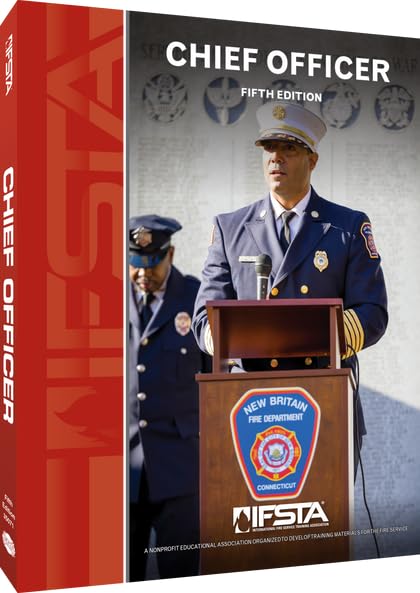
IFSTA’s Chief Officer, 5th Edition, designed for current and aspiring chief officers, equips students for success in leading fire and emergency services. This revised edition covers essential topics like health, safety, wellness programs, risk management, and community risk reduction. It aligns with NFPA 1020’s Chapter 11 – Fire Officer III and Chapter 12 – Fire Officer IV.
* Your purchase through our Amazon Associates program will benefit the programs of the National Fallen Firefighters Foundation to honor America’s fallen fire heroes; support their families, colleagues, and organizations; and work to reduce preventable firefighter death and injury.
Podcasts
Action-Steps for Firefighters & Fire Officers
Maintain awareness of skill proficiencies throughout the organization to address and fill training gaps.
- Firefighters pursue mastery.
- Company Officers develop capability.
- Chief Officers build systems for excellence.
- Families support the journey of continuous improvement.
Firefighters: Own Your Professional Growth
Firefighters are responsible for maintaining and improving the knowledge, skills, and abilities necessary to perform safely and effectively.
- Commit to continuous learning through training, education, certifications, and professional development opportunities.
- Maintain proficiency in both core and emerging skills.
- Seek feedback, embrace coaching, and participate in evaluations.
- Share knowledge and lessons learned.
Organizational Impact: Skilled and engaged firefighters strengthen operational readiness and safer emergency response.
Company Officers: Develop Crew Competence
Company Officers serve as the link between organizational expectations and individual performance.
- Evaluate crew capabilities and identify skill gaps.
- Foster an environment of learning and development.
- Mentor personnel and provide constructive feedback.
- Ensure training reflects current risks and best practices.
Organizational Impact: Strong company-level leadership creates proficient teams prepared for excellence.
Chief Officers: Create a Culture of Excellence
Chief Officers establish the systems, resources, and expectations that drive organizational proficiency.
- Establish training standards and accountability systems.
- Invest in leadership development and succession planning.
- Promote data-informed decision-making.
- Encourage innovation and continuous improvement.
Organizational Impact: Effective leadership creates a resilient, adaptable department.
Family: Support Lifelong Learning
Families play an important role in supporting the professional growth and development of firefighters.
- Encourage education and professional development.
- Recognize the commitment required to maintain readiness.
- Support healthy routines and preparation.
- Celebrate achievements and milestones.
Organizational Impact: Supportive families create a stable foundation for success.
Credit Hours: 1 Hour
Credit Hours: 1 Hour
Credit Hours: 1 Hour
Credit Hours: 1 Hour
Credit Hours: 1 Hour
Credit Hours: 1 Hour
Credit Hours: 1 Hour
Credit Hours: 1 Hour
Credit Hours: 2 Hours
Credit Hours: 1 Hour
Credit Hours: 1 Hours
Credit Hours: 1 Hour
Help us improve organizational proficiency in fire rescue!
Your feedback on Initiative #9 (Organizational Proficiency) will help departments nationwide foster long-standing partnerships, increase community engagement and program awareness, and encourage action which aligns with best practices. This survey takes less than 2 minutes.